Choosing the right packaging is an important business decision that goes beyond appearance. The right packaging can protect your product, strengthen your brand presentation, improve the customer experience and support efficient shipping. This guide explains how businesses can choose packaging based on product type, material, size, branding, industry and order requirements.
Packaging is often the first physical interaction a customer has with a product. Whether you operate an e-commerce business, D2C brand, retail company, food business, manufacturing company or established global brand, the packaging you choose can influence how your product is protected, presented and experienced.
But with so many packaging options available, how do you know which one is right for your product?
The answer depends on several factors, including your product’s size, weight, fragility, storage requirements, transportation method, branding goals and order volume. Choosing packaging based on these factors can help businesses find a solution that is practical, attractive and suitable for their operations.
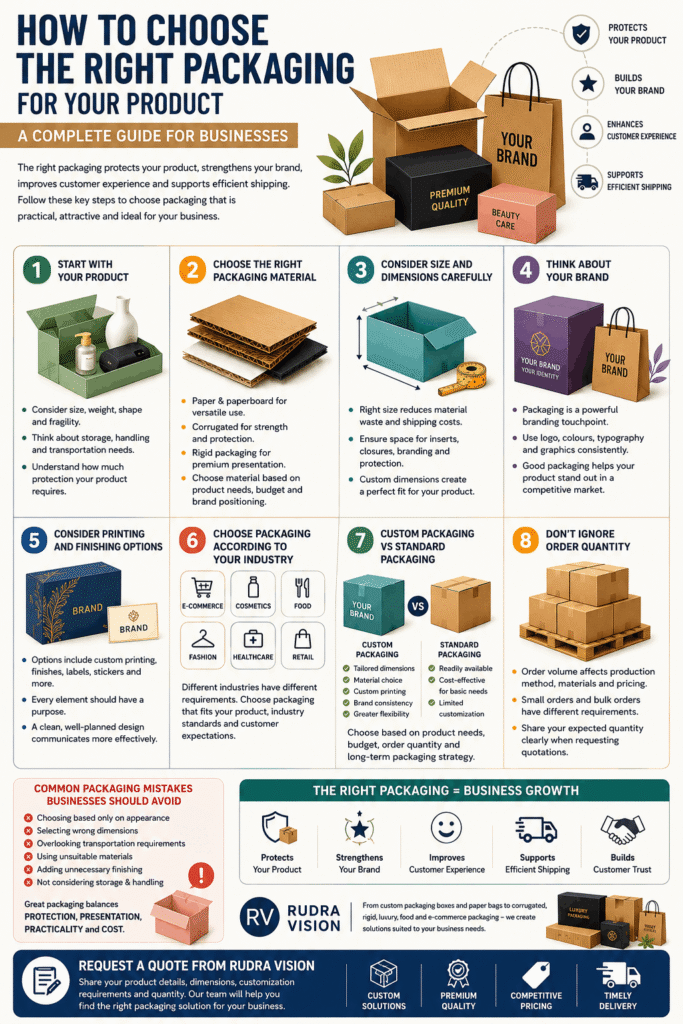
1. Start With Your Product
The first step in choosing packaging is understanding the product itself.
Consider its size, weight, shape and level of fragility. A lightweight product may require a different packaging structure than a heavy or delicate product. Similarly, products that need additional protection during transportation may require stronger packaging materials or an internal protective structure.
Think about how the product will be stored, handled and transported before selecting the final packaging format.
2. Choose the Right Packaging Material
Packaging materials can significantly affect the performance and appearance of your packaging.
Paper and paperboard packaging can be suitable for a wide range of products, while corrugated packaging is commonly used where additional strength and protection are required. Rigid packaging can provide a more premium presentation for products where appearance is an important part of the customer experience.
The right choice depends on your product requirements, intended use, budget and brand positioning.
Businesses should also consider whether the packaging material is appropriate for its intended environment and supply chain.
3. Consider Size and Dimensions Carefully
Packaging that is too large can result in unnecessary material usage and inefficient storage or transportation. Packaging that is too small may compromise the product or make the customer experience less convenient.
Custom dimensions can help businesses create packaging that fits their products more effectively.
Before finalizing the size, consider the product dimensions, protective requirements, inserts, closures and any additional branding elements that need to fit inside or on the package.
4. Think About Your Brand
Packaging is not only functional. It can also act as an important branding touchpoint.
Your logo, colours, typography, graphics and product information can be incorporated into the packaging to create a consistent brand identity.
For businesses competing in crowded markets, professional packaging can help products look more distinctive and recognizable. Premium finishes and carefully selected materials can also support a particular brand positioning when appropriate.
The objective should be to create packaging that feels consistent with the product and the customers you want to reach.
5. Consider Printing and Finishing Options
Once the packaging structure and material have been selected, businesses can consider how the packaging should be printed and finished.
Depending on the packaging type and design, options may include custom printing, branding elements, special finishes, labels, stickers and other decorative or functional components.
However, more finishing does not automatically mean better packaging. Every additional element should have a purpose and fit the product’s positioning and budget.
A clean, well-planned design can often communicate a brand more effectively than an unnecessarily complicated package.
6. Choose Packaging According to Your Industry
Different industries have different packaging requirements.
For example, an e-commerce business may prioritize product protection and a practical unboxing experience. A cosmetics or beauty brand may focus heavily on premium presentation and brand consistency. Food businesses may have specific packaging requirements based on the product and its intended use.
Fashion, retail, healthcare, home furnishings, hospitality, manufacturing and corporate businesses can also require different packaging formats.
Understanding your industry’s requirements before selecting packaging can help you avoid choosing a solution that looks good but does not work effectively in practice.
7. Custom Packaging vs Standard Packaging
Standard packaging can be useful when businesses need a readily available format that meets basic requirements.
Custom packaging, on the other hand, allows businesses to specify dimensions, materials, printing and other requirements according to their products.
For brands with specific packaging needs, custom manufacturing can provide greater flexibility. It can also help businesses create packaging that fits their product and brand identity more closely.
The right choice depends on factors such as product requirements, order quantity, budget and long-term packaging strategy.
8. Don’t Ignore Order Quantity
Your expected order volume is another important consideration.
A startup ordering a smaller quantity may have different requirements from an established business placing regular bulk orders. Production methods, material selection, customization and pricing can all be influenced by order quantities and specifications.
For this reason, businesses should communicate their expected quantities and requirements clearly when requesting packaging quotations.
Common Packaging Mistakes Businesses Should Avoid
Choosing packaging based only on appearance is one of the most common mistakes businesses make.
Other issues can include selecting the wrong dimensions, overlooking transportation requirements, using unsuitable materials, adding unnecessary finishing or failing to consider how packaging will be stored and handled.
Packaging should ultimately balance protection, presentation, practicality and cost.
Find the Right Packaging Solution for Your Business
The right packaging depends on your product, customers, industry and business requirements. There is no single packaging format that works for every company.
At Rudra Vision, businesses can explore customized packaging solutions based on their product specifications, branding requirements and order needs. From custom packaging boxes and paper bags to corrugated, rigid, luxury, food and e-commerce packaging, the focus is on creating solutions suited to individual business requirements.
If you are planning a new packaging project or looking to improve your existing packaging, share your product details, required quantity, dimensions and customization requirements with our team.
Request a quote from Rudra Vision and discuss the right packaging solution for your business.